Friday, March 23, 2018
Why do people buy Firearms?

The economic principle I’m exploring is “People generally respond to incentives in predictable ways”
My research question to help me study the economic principle is “When do people find it necessary to purchase firearms?” This article helps me answer this question because it explains what I need to do in order to purchase a firearm in Illinois.
First, The article published in Pew Pew Tactical titled “Illinois Gun Laws” demonstrates this economic principle because it shows how in order to buy a gun you need a FOID card. You can get a Foid card if you are 18 or above, you can also get one earlier if you have a sponsor from someone who does already have a Foid card but they must be a parent or guardian.
Second, The article published in Pew Pew Tactical titled “Illinois Gun Laws” demonstrates this economic principle because it shows You can only get rifles when you are below 21, after you reach 21 you can buy anything from pistols to sniper rifles.
Third, The article published in Pew Pew Tactical titled “Illinois Gun Laws” demonstrates this economic principle because it shows that they conduct background searches for any sign of mental health or criminal acts. There are more reasons why they would prevent you from buying a gun but those are the two most applicable

Clean Energy Advancing in the Private Sector
The economic principle I’m exploring is
“Because of scarcity, people choose.
All choices have an opportunity cost. "
“Because of scarcity, people choose.
All choices have an opportunity cost. "
 |
|
|
My research question to help me study the economic principle is “What can private and public sectors do to enrich alternative energy?”https://www.energy.gov/articles/advancing-private-sector-investment-clean-energy
The article/video/etc published in U.S. Department of Energy titled “Advancing Private Sector Investment in Clean Energy”
demonstrates this economic principle because it shows
that the private and public sector is improving in its implementation of alternative energy.
demonstrates this economic principle because it shows
that the private and public sector is improving in its implementation of alternative energy.
First, many major contributions to alternative energy were announced at the United Nations Climate Change Conference.
Then, the Obama administration launched the Clean Energy Investment initiative which sent
2 billion dollars to private sectors in order to fund alternative energy.
In 2015, the funds reached two billion dollars. At the same time, the U.S. Department of Energy
created a Clean Energy Investment Center for strategic financial planning in developing alternative energy.
The investment led to innovative momentum which spread innovations
that continued to be worked on for years. Many of these innovations involve new technology and new companies.
Then, the Obama administration launched the Clean Energy Investment initiative which sent
2 billion dollars to private sectors in order to fund alternative energy.
In 2015, the funds reached two billion dollars. At the same time, the U.S. Department of Energy
created a Clean Energy Investment Center for strategic financial planning in developing alternative energy.
The investment led to innovative momentum which spread innovations
that continued to be worked on for years. Many of these innovations involve new technology and new companies.
Second, Bill Gates created an organization named the Breakthrough Energy Coalition
which brought millions of dollars from investors around the world in order to progress alternative energy.
All of the money will be contributed to companies that are early in development in regards to creating
solutions for climate change and improving alternative energy.
Also, twenty countries that make up eighty percent of global clean
energy research spending decided to double their spending on clean energy research.
Perhaps, these investments will lead to a boost in an economy due to
more employment in developing green energy.
These countries have some of the greatest resources available
in order to relieve the ongoing energy crisis.
which brought millions of dollars from investors around the world in order to progress alternative energy.
All of the money will be contributed to companies that are early in development in regards to creating
solutions for climate change and improving alternative energy.
Also, twenty countries that make up eighty percent of global clean
energy research spending decided to double their spending on clean energy research.
Perhaps, these investments will lead to a boost in an economy due to
more employment in developing green energy.
These countries have some of the greatest resources available
in order to relieve the ongoing energy crisis.
Third, the Clean Energy Investment Center which was created by the
UN climate change conference decided to make information more public about alternative energy.
The Clean Energy Investment Center cooperates between private companies
and the Depart of Energy in order to provide more unity and education on alternative energy production.
Communication is key in providing the best solutions in regards to boosting alternative energy and the economy as well.
The Clean Energy Investment Center improves upon its communication
skills via sending out “Request For Information” surveys on ways it can improve its skills in regards
to educating the people on alternative energy funding and production.
UN climate change conference decided to make information more public about alternative energy.
The Clean Energy Investment Center cooperates between private companies
and the Depart of Energy in order to provide more unity and education on alternative energy production.
Communication is key in providing the best solutions in regards to boosting alternative energy and the economy as well.
The Clean Energy Investment Center improves upon its communication
skills via sending out “Request For Information” surveys on ways it can improve its skills in regards
to educating the people on alternative energy funding and production.
In my next blog post I will research:
I may research what is the government doing with youth in order to promote alternative energy?
Thursday, March 22, 2018
Are you in good hands?
 |
| Source: Flurt |
The economic principle I’m exploring is Institutions are the “rules of the game” that influence choices
My research question to help me study the economic principle is “what is the government doing to improve healthcare for everyone?”
The article published by Harvard Business Review titled “What the Trump Administration Needs to Do About Health Care" talks about how Donald Trump and his congress will try to re-shape and re define the U.S. healthcare policies.
Trumpcare facts talks about how Donald Trump is reforming the healthcare system.
Donald Trump has been very adamant on repealing Obamacare and implementing a better healthcare policy. Obama’s reformed healthcare by extending a law to make medical insurance more accessible for the poor, providing more coverage, and creating subsidized for the covered individuals. Republicans felt that Obama care needed to be repealed and have tried numerous times to do so.
Trumps plan:
1.Eliminated the individual mandate that Obamacare put in place, this means that there is a penalty for not being able to maintain continuous coverage. This would make getting health insurance even harder for the poor because if they aren’t able to get health insurance in the first place, there is no way they going to be expected to keep it if the price keeps going up since they don’t have it. This just puts obtaining healthcare in a continuous unattainable loop for the less fortunate.
2.Eliminates the employer mandate that requires businesses with more than 50 full-time paid workers to offer health insurance. Again, a lot of the poor rely on the fact that their work offers them some sort of health insurance. If a company decides they want to save more money but cutting insurance coverage for its employees they can. This will just cause an influx in poor without coverage for healthcare, which will only widen the inequality within the healthcare system.
3.Trump’s plan will also limit cost assistance by reducing the grant subsidies of people who earn up to 400% of the federal poverty line to 350%, and removing the extra help for people earning up to 250% of the poverty line. Overall the cost assistance isn’t as generous as it was before. His plan just limits what they poor will receive and doesn’t affect the upper class much. Again, this is another policy widening the inequality gap since it offers less to the poor and the same or more to the wealthy who can afford health insurance.
Trump believes that too much money is going into healthcare and not being used properly. He believes that fewer people need to be on Medicaid and that they have been too lenient on who is allowed on it. He believes that the resources going into funding healthcare are limited and need to be redistributed better among Americans.
I disagree with Trump's policies because a lot of Trump's policies have an indirect negative affect for the less wealthy in America. Trump wants to increase pricing if people cannot maintain keeping the coverage, and keeping coverage is already hard fro the poorer Americans to do in the first place.
Overall, the Trumpcare reform hasn’t pushed for making healthcare more accessible or making it better quality. This is the reason why the United States ranks one of the lowest for providing healthcare for all its citizens. There is an obvious need for improvement somewhere within the healthcare system and that something needs to be done sooner rather than later.
Future Research: How does American's healthcare system (funding, insurance, access to care, etc.) compare to other countries' policies?
Gray Matter Matters
 |
| Source: Harvard Magazine |
The economic principle I’m exploring is people generally respond to incentives in predictable ways as well as Institutions are the "rules of the game" that influence choices.
My research question to help me study the economic principle is “To what extent is behavior controlled by the mind?”
The article published in Proquest titled “Are Teens Just Wired That Way?” demonstrates this economic principle because it shows that changes in the brain throughout adolescence affect how teenagers act.
Jay Giedd, a neuroscientist, was studying healthy teenager brains and noticed that “the brains appeared to change in unexpected ways as the youths matured through adolescence.” He looked closer and realized that the largest shifts during puberty occurred in the frontal lobe of the brain. The front of the brain is “believed [to be] crucial for advanced mental functions such as reasoning, making judgements and self-control.” Therefore, Giedd believes that the stereotypical teenage behaviors such as rebelliousness that are commonly blamed on “raging hormones” could be caused by a “burst of rapid change” that sculpts the brain.
Although the theory is often questioned, if it is true then “the right kinds of teenage experiences might build the structures and connections necessary for a healthy adulthood.” For example, if teens are involved in music, academics, or sports, their brains will “likely be hard-wired that way.” However, the theory is controversial because “the roots of behavior are complex and cannot be easily explained.” John Bruer, president of the James S. McDonnell Foundation, believes that the theory is simply a way to excuse teenagers’ “irresponsible [and] careless” behaviors.
Nonetheless, Giedd does continue to find it interesting that “the gray matter thickens, peaks around puberty and thins.” Based on this concrete data, he believes that “the shrinking of gray matter is one way the brain translates experience into knowledge.” Overall, Giedd agrees that “linking brain change with behavior” possible requires a greater understanding of the “complexity of inter-neural connections,” which he assumes is where the “chemistry of the brain becomes thought, ideas--and behavior.”
In my next blog post I will research: To what extent can we research how adolescent brains translate thought to behavior?
Laws and Regulations
 |
| Source: How This Recent Court Ruling Could Hurt Equal Pay Laws And Competitive Hiring |
The economic principle I’m exploring is “Institutions are the “rules of the game” that influence choices”
My research question to help me study the economic principle is “How do cultural differences affect wages between men and women in healthcare?”
The article published in Forbes Magazine titled “How This Recent Court Ruling Could Hurt Equal Pay Laws And Competitive Hiring” demonstrates this economic principle because it shows that even laws have been placed because of how women have been biased in the past. If women are being chosen for employment based on their salary history, then women would get an even less chance of getting a job when competing with a man.
First, this is an example of how people are not helping the wage gap between men and women. By certain court rulings, it is said that women are going to have certain positions based on their income history. This is an unfair ruling because it will only keep the gap as it is, if it doesn’t widen it any more.
Second, if women are going to get jobs based on their income history from past jobs, employers should consider women as an equal candidate as their male counterpart because job interviews. Job positions should truly be based on experience and college credits if they were to truly be strict on history.
Third, fortunately, there are states that go against this ruling. According to Tanya Tarr, “In fact, Philadelphia, Boston and New York are cities that passed laws to ban the practice, and 40 states have taken up equal pay bills in the 2017 legislative session. California - where the case took place - passed a law in 2015 establishing that prior pay alone could not justify pay differences based on gender, but the case from the 9th Circuit started before that bill became law.” The case from the 9th circuit refers to the 1982 ruling that “said that employers could use previous salary information as long as they applied it reasonably and with a policy that justified it.”
In my next blog post I will research: Are there specific states that have certain laws, policies or regulations regarding the wage gap?
It's more than just the pixels.
 |
| www.news.ubc.ca |
The economic principle I’m exploring is “People generally respond to incentives in predictable ways. ”
My research question to help me study the economic principle is “What so great about working in a video game company” The article published by CNBC entitled “Video Games Impact the Economy More Than You Think” demonstrates this economic principle because it shows, How big video games can be.
First, Video game companies made a lot of money for our economy. From the article by CNBC author Chris Morris says, ¨A new study from Economists Incorporated reports that the video game industry added $4.95 billion to the U.S. Gross Domestic Product last year—and the entertainment side of the software world is growing considerably faster than other segments of the economy¨. Companies have been making a massive increase in our economy which helps out a lot.
Second, the companies have also have hired a whole lot of new employees. From the article by CNBC author Chris Morris says, ¨On the employment front, while other industries have been cutting back their payrolls, there’s a hiring boom going on in the video game world. Since 2005, the total number of people working in games has increased by nearly 9 percent annually¨. Companies are hiring more and video games are becoming a more popular thing.
Third, employees make a lot of money from working for these companies. From the article by CNBC author Chris Morris says, ¨On average, industry employees receive an annual compensation of $89,781, with the industry total hitting $2.9 billion. (A note to jobseekers, salaries were much higher at publishing companies—averaging over $112,000 versus roughly $76,000 at smaller game development studios.)¨ Just because there is some money involved in making a video game does not mean you do not get a part of the income. In my next blog post I will research: What are main concepts in video games that make them so popular.
Why Pay For Music?

Source: www.macworld.com
The article/video/etc published in the Huffington Post titled “Why you should pay for music” demonstrates this economic principle because it shows how when people pay for their music then music producers are more motivated to keep making quality music for their listeners.
First, If people aren’t willing to pay for their music then the producers of that music don’t make any profit and might stop making music. It is to all of our own self interest to purchase all of our songs so that the bands that we enjoy listening to are provided for and keep producing more music.
Second, A decline in people paying for their music leads to a decline in the quality of music because producers don’t spend too much time on a song if they know they will get little to nothing for it.
If people pay for their music then bands will be more motivated to put more time and effort into making their songs sound great if they know that they will be payed for the quality of their music.
Third, Bands make little to nothing from concerts after they pay off all the expenses from their trip there, their hotel, and all of the sound guys that help them put the concert together. At the end of the day the biggest producer of income for bands comes from people who buy their music.
In my next blog post I will research: Is there a better alternative to obtaining music than free streaming services like Spotify?
Wednesday, March 21, 2018
US Is Not Number 1
 |
| Source: Church Leaders |
The economic principle I’m exploring is “Institutions are the “rules of the game” that influence choices
My research question to help me study the economic principle is “How has scarcity in the medical field harmed and helped healthcare in American society?”
The United States Health System Falls Short demonstrates this economic principle because it shows that America spends a lot of time and money on healthcare but it does not meet the requirements for most Americans due to expenses in medicine and research.
In the article, it talks about how the United States spends far more on health care than other first-world big-income countries. The United states spending levels on health has even risen steadily over the past three decades, yet the United States has poorer overall health compared to many other countries. Some may say since life expectancy has increased that healthcare must have gotten better but in reality it has been worsening over the past few years, specifically in areas affected heavily by the opioid crisis.
The U.S. healthcare system has always gallen short in being able to deliver reliable and accessible health care to everyone, specifically the poor. The lower class, or the poor, have little to no access to getting healthcare, or at least good health care. This means that the poor have inadequate prevention methods, delayed diagnoses, safety problems, and incomplete treatments. In the article, the United States ranks:
- 9th on timeliness
- 10th on administrative efficiency
- Last on access and has the worst performance compared to all of the other countries,
The U.S. low performance usually it because of time wasted on discussing money like insurance claims and billing. Life saving treatments and drugs are already hard to come by because of how hard it is to obtain and make, these complications just make it harder for regular people to receive treatment.
Monday, March 19, 2018
Current Political Tempers and Why They Inhibit Any Signs of Gun Control Laws
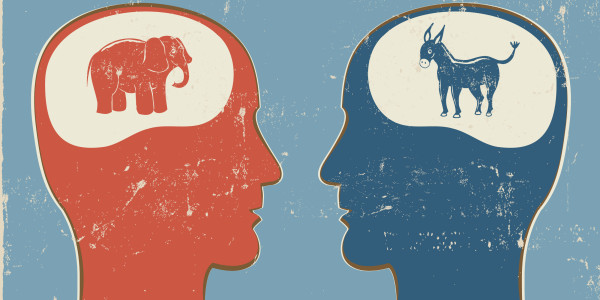 |
| Source: iStockPhoto |
The economic principle I’m exploring is Institutions are the “rules of the games” that influence choices.
My research question to help me study the economic principle is: In the US Government, how does the institutional design of the legislative, executive, and judicial branches shape and influence policymaking surrounding the hot topic of guns, as related to the recent school shootings?
The article published in CNN Politics titled Why Congress is hesitant to pass gun control, by the numbers demonstrates this economic principle because it shows how America is sharply divided in opinion due to its bipartisan structure.
First, the article notes that even though 90% of Americans show universal background checks, and that there is no significant laws being passed on gun control, there are some sort of political obstacles that are hindering this process.
Second, in the wake of acts of terrorism, many opinions of America are highly polarized. In a study by Harry Enten, he found that Americans were more polarized on gun policy than any other issue except building a border wall against Mexico. Partly because of this, and with support from the NRA, the conservative forces are too strong for any effective action on gun control to take place.
Third, those who advocate gun rights are much more passionate and are around 15% more likely to contact their public officials in favor of gun rights instead of those who are pro-gun control. Furthermore, even if some Republicans don’t advocate for gun rights, they may vote in support of it so their republican voices will be heard. Although the long term trend is towards saving future victims by implementing harsher gun laws, right now, the political power is in the Republican’s hands.
In my next blog post I will research: The ridiculous reason Congress won't even debate gun laws
Will Congress Ever Make a Move? After Sandy Hook, After Vegas, After Parkland...
 |
| Source: NPR |
The economic principle I’m exploring is : Institutions are the “rules of the games” that influence choices.
My research question to help me study the economic principle is : In the US Government, how does the institutional design of the legislative, executive, and judicial branches shape and influence policymaking surrounding the hot topic of guns, as related to the recent school shootings?
The article published in CNN titled Congress wonders if this time will be different for gun control
demonstrates this economic principle because it argues that due to the institution build of our American Government, the Republican dominated Congress has been doing more talk than action in terms of gun control.
First, due to Congress’s lack of action after a repeated pattern of shootings, as such in the Parkland Florida shooting, Vegas club shooting, or the Texas church shooting, it is unclear whether legislative measures will be taken to tighten gun control.
Second, the lack of action from Congress cannot solely be due to party affiliation. Republican representative Carlos Curbelo advocates for discussion of guns on the floor, and would like to see reasonable, stronger gun laws that would help make America safer.
Third, there have been minimum efforts such as new policies toward increasing background checks. Democrats argue that these efforts only scratch the surface at reforming gun control. There must be something about the structure of Congress that is inhibiting action. The pace of change in Congress is deliberately made to be slow, given the many different opposing perspectives, bicameral structure. In 2013 the Senate voted on increased background checks and increased ban of more semiautomatic guns-- but these efforts failed even with those saddened by Sandy Hook lobbying a democratic-controlled Congress
In my next blog post I will research: THE FOUR REASONS CONGRESS WON’T DO ANYTHING ABOUT GUN CONTROL
In my next blog post I will research: THE FOUR REASONS CONGRESS WON’T DO ANYTHING ABOUT GUN CONTROL
Sunday, March 18, 2018
Pre-Production for Animated Films
 |
| media.gettyimages.com |
The economic principle I’m exploring is “Because of scarcity, people choose. All choices have an opportunity cost.”
My research question to help me study the economic principle is “How is a story idea first developed and presented
under the restrictions of limited time and labor?”
under the restrictions of limited time and labor?”
The article published in the Washington Post titled “PIXAR TIPS: ‘Brave’ artist Emma Coats shares her storytelling
wit and wisdom on Twitter” demonstrates this economic principle because it shows that production - which
involves creating detailed sketches and drawings, paintings, color scripts, sculpting original models of characters and
landscapes, and the actual task of digitally animating and rendering - is very expensive and time consuming.
Because of this, the story itself must be perfected first.
wit and wisdom on Twitter” demonstrates this economic principle because it shows that production - which
involves creating detailed sketches and drawings, paintings, color scripts, sculpting original models of characters and
landscapes, and the actual task of digitally animating and rendering - is very expensive and time consuming.
Because of this, the story itself must be perfected first.
First, maximum pre-production time is dedicated to storyboarding directly - less time on “the written page or
script”, as animation giant John Lasseter has said. Walt Disney began the process for animation pre-production by
creating, along with his team, multiple comic book editions of the same story idea. These various editions would
then be compared against one another and strengthened. This is the fastest and most cost-effective way of getting
the story down.
script”, as animation giant John Lasseter has said. Walt Disney began the process for animation pre-production by
creating, along with his team, multiple comic book editions of the same story idea. These various editions would
then be compared against one another and strengthened. This is the fastest and most cost-effective way of getting
the story down.
Second, the story is given precedence over the appearance, just as the audience is given precedence over the writers.
The story is the core of the film and grabs the appeal of the audience the most. Producing a feature-length animated
film is expensive and time-consuming, so the payoff is absolutely dependent on the story. It doesn’t really matter
whether the story is written to be most pleasing to the producers or writers; the whole time, all those working on the
film must consider it from the point of view of the audience. If it doesn’t strike a chord, no one will pay to see it.
The story is the core of the film and grabs the appeal of the audience the most. Producing a feature-length animated
film is expensive and time-consuming, so the payoff is absolutely dependent on the story. It doesn’t really matter
whether the story is written to be most pleasing to the producers or writers; the whole time, all those working on the
film must consider it from the point of view of the audience. If it doesn’t strike a chord, no one will pay to see it.
Third, each still drawing from the storyboard is compiled into a sort of slideshow and played back with voiceovers
and music for dialogue and soundtrack. Storywriters watch these reels over and over to ensure they like the film as is.
Only once this is approved, detailed character designs, beat boards, color scripts, and clay models can finally be
developed as the start of actual production. This is the expensive part, and it must be done with certainty - that is,
certain preproduction.
and music for dialogue and soundtrack. Storywriters watch these reels over and over to ensure they like the film as is.
Only once this is approved, detailed character designs, beat boards, color scripts, and clay models can finally be
developed as the start of actual production. This is the expensive part, and it must be done with certainty - that is,
certain preproduction.
In my next blog post I will research: the production process of animation and how it’s done most economically.
Friday, March 16, 2018
Rolling The Dice
 |
| source: www.wherethewindsblow.com |
In baseball, players always signed guaranteed contracts, meaning that the player signed must be paid the amount of money agreed upon no matter the circumstances. For example,¨The Braves signed shortstop Andrelton Simmons, first baseman Freddie Freeman, outfielder Jason Heyward, and pitchers Julio Teheran and Craig Kimbrel, all under 26 years old, to multiyear contracts starting in 2014 and totaling a combined $280 million.¨ That $280 million is certain to be lost to those players, which is simply just a ¨rule¨ in baseball. Despite the chances of injury or poor play, teams must be willing to take a risk of losing a boatload of money if they choose to take on a major contract.
Age can be a significant factor for how much money a player is signed for. ¨For the owners, the objective is to retain players who have the potential to contribute significantly to their teams in future years and who would have otherwise become free agents, but limit their future salaries. The owner must weigh the probability of future success of the player. If the owner negotiates a multiyear contract and the player’s performance is stellar, then the owner succeeds. However, if the player does not make the grade and/or is cut from the major league team, then the owner loses.¨ Older players carry some fatigue with them, but also more experience. On the other hand, young players have more active bodies and are most likely in better physical shape, but they don´t understand the game quite as well yet.
In my next blog post, I will research: How do the recent trends and the player´s reputation on and off the field have an impact?
Culture Changes = Advertising Changes
 |
| Source: Ted.com |
The article published in The Atlantic.com titled “How Powerful is Advertising?” by Randall Rothenberg demonstrates the economic principle “people generally respond to incentives in predictable ways” because it shows how advertising has changed over the years to keep up with a change in culture over time. This can be seen simply in the different ways advertising has has targeted different people, and has contained varying messages, based on varying periods of time in America.
First, in the 1950’s, according to the article, advertising was widely known as a method of “subliminal messaging,” or as Ruthenberg puts it, “(advertisers) were using hidden symbols to goad the unconscious mind and the body under its control into the act of acquisition” (Rothenberg). Seeing as the 50’s was in the midst of international troubles including the Cold War, it’s no surprise that the public believed in these (since disproven) sneaky methods of advertising. So, people typically bought things that these ads supposedly made them want to buy. In all, the culture of the time was fear of communism and ‘spies,’ so clearly this added to the ability for citizens to go along with such a method of advertising. Advertisers knew what the common public was feeling, and acted upon it to sell, and take advantage of it.
Next, in the 70’s through the 90’s, movements for civil rights both brought people together, but emphasized the division in ideologies within America. So, companies began directing attention towards specific races, genders, etc, in order to sell products. Says the article, companies "encourag[ed] people to separate themselves into more and more specialized groups" and develop "habits that stressed differences between their groups and others." This was a revolutionary change in advertising in America, one that encouraged and took advantage of the division in America, and therefore one that succeeded with flying colors. So, in summary, companies not only took advantage of communist threats, but also societal issues within America in order to appeal to the most amount of people.
From the late 2000’s to present day, we see companies shift advertising to a new platform, one that I have touched on in my last post, but will reiterate nevertheless: social media. Companies, having noticed the increasing societal reliance on technology, began putting a lot of effort into moving towards Internet ads in order to, as usual, reach the highest amount of customers. Although, the difference with present day ads and past ones,is that companies are now able to target individual people, contrary to before where the most they’d do is groups of people.With the internet, companies are able to use one’s search history and so on in order to personalize ads, something never done prior to this point in time. And, the article claims, this will only get more and more prevalent and advanced. Claims the article, “technology will force us to become ‘increasingly isolated from ever-greater portions of the outside world.’"This being so, as technology gets more advanced, the more we will get sucked into it, and therefore the more we will be vulnerable to the individualist attempts to sell us products by these businesspeople.
In all, for the past decade or so, companies have switched over to technology platforms in order to adapt to new changes in American culture to sell more products, just as it has done in the past. This begs the question: do companies’ ads change incentives behind our purchases, or do we change the way companies advertise? According to this research, the answer is the latter. Based on how companies have changed advertising methods based on changes in culture, it’s not hard to see the power we have on these corporations indirectly. We have learned how ads have changed based on culture, how marketing has changed based on incentives, but in my next blog post I will research: if there has been any change in incentives behind purchases over the years, specifically, from generation to generation.
The Ryze and fall of processors
 |
| Dreamstime.com |
The economic principle I’m exploring is: People gain when they trade voluntarily
My research question to help me study the economic principle is: How do consumers of computer parts know that they are getting the best price?
The article/video/etc published in “Digital Trends” titled Intel slash-and-burns processor prices ahead of AMD’s Ryzen CPU launch demonstrates this economic principle because it argues/shows how the producers of processors, whether it be the main two or smaller ones, play off of each other to keep the market healthy and competitive.
First, Intel’s I7 processor line has been on the market since early 2017, and had no real competition that could come close to the power of the I7’s essentially giving them a free monopoly. So with the release of AMD’s new Ryzen line having almost identical capabilities, exceeding that of even the I7 by just a tad bit, the competition is starting to heat up.
Second, because of the new AMD line being pretty much the same as the Intel I7’s with a lower price this has caused Intel to lose their mind and lower the prices of all of their I7’s by as little as $30 to as much as $300.
Third, which ever you decide to go with, whether it be AMD or Intel, all depends entirely on one thing, and Coincidentally enough it happens to be the next topic I’m researching: motherboards.
In my next blog post I will research: Motherboards
Equal Opportunities

Source: Gender gap in hospital medicine: Do women have the same opportunities?
The economic principle I’m exploring is “Institutions are the “rules of the game” that influence choices”
My research question to help me study the economic principle is “How do cultural differences affect wages between men and women in healthcare?”
The article published in Today’s Hospitalist titled “Gender gap in hospital medicine: Do women have the same opportunities?” demonstrates this economic principle because it shows that although there is still a fairly big wage gap between men and women, there are places that are trying to make that change.
First, the wage gap is a big problem that hasn’t stopped growing due to lack of acknowledgement. Deborah Gensensway’s article in Today’s Hospitalist, “Gender gap in hospital medicine: Do women have the same opportunities?”, she says that “2015 Today’s Hospitalist Compensation & Career Survey indicate that full-time women hospitalists who treat adults report earning 16% less than their male colleagues, a difference of more than $37,000 a year”.
Second, if this issue isn’t resolved sooner rather than later, then women will always be under the suppression of men. Kevin Miller, author of “ The Simple Truth About the Gender Pay Gap” (AAUW), he says that “ At the rate of change between 1960 and 2016, women are expected to reach pay equity with men in 2059. But even that slow progress has stalled in recent years. If change continues at the slower rate seen since 2001, women will not reach pay equity with men until 2119.” If the issue isn’t resolved soon then there’s a possibility that the wage gap will never change and possibly even widen.
Third, there should be no reason to have such a big wage gap between men and women. There are places that are starting to try and change the distance between men and women in income. “Bina Desal ( MD at Chicago’s Loyola University Health System) says that the field has a great shot at being equitable because “we are young and there are 50-50 males-to-females going into hospital medicine”.
In my next blog post I will research: Are there any actual laws taking part in the gender wage gap?
Friday, March 9, 2018
Does trade benefit the rich & the poor?
 |
| source: economist.com |
KEY ECONOMIC PRINCIPLES I’M ADDRESSING: People gain when they trade voluntarily.
OVERALL RESEARCH QUESTION: Are trades between rich and poor countries benefiting both sides.
SUB QUESTIONS: Do rich countries try to take advantage of poor countries? Are poor countries relying on rich countries for economic support? Can poor countries also take advantage of rich countries?
RESOURCES FOR RESEARCH: DATABASES: WEBSITES: Res.org ; The Guardian
Healthcare in America
 |
| Source: HBR.org |
OVERALL RESEARCH QUESTION: Why the american healthcare system isn’t beneficial for everyone.
SUB QUESTIONS
In the past few years, how has the system changed at all?
How have medical companies changed their approach in getting medicine out to everyone?
What does medicare and medicaid cover for the people on them?
Who gets the best medical coverage in america?
RESOURCES FOR RESEARCH:
Trump, Prelim, Mirror, WHO
Tuesday, March 6, 2018
Picture Perfect
 |
| Nvidia |
My research question to help me study the economic principle is: How do consumers of computer parts know that they are getting the best price
The article published in Digital Trends titled “Recent data suggests that GPU supply might be stabilizing and prices falling” demonstrates this economic principle because it argues that if people should only buy the graphics cards if they really want them.
First, the graphics cards price is currently inflated an absurd amount, like the article said prices for the Nvidia cards have risen by as much a 100% in some cases. Being insanely high these prices should ward off those who don’t immediately need the part.
Second, the simple solution of switching brands isn’t the issue as Nvidia’s main competitor AMD is also having price issues, and although not as intense as Nvidia, with all high-end powerful graphics cards. So no matter where you go, and how you try to buy, you will be getting these incredibly high prices, which for the average consumer are on the steeper side of the coin.
Third, the prices of the graphics cards are sure to go down with the supposed rumors of graphics cards specifically designed for mining. If these rumors turn out to be true then the price will rapidly decrease as the sharks who wish to buy will, instead of going for the current top of the line, toward the less expensive, more dedicated graphics cards. In my next blog post I will research: Processors
The Economics Insider of a Video Game Company

The economic principle I’m exploring is “People generally respond to incentives in predictable ways. ”
My research question to help me study the economic principle is “How do video game companies incentivise gamers
to buy their games?”
to buy their games?”
The article/video/etc published in The Guardian titled “How to get into the games industry - an insiders´
guide” demonstrates this economic principle because it shows how the rise of video games is making
more and more job opportunities available in big video game companies.
guide” demonstrates this economic principle because it shows how the rise of video games is making
more and more job opportunities available in big video game companies.
First, video game companies will find employees who are passionate about designing and making video games.
From the article by The Guardian, Game Designer Allison S. explains “Passion and experience
still carry a lot of weight in the game industry¨.
From the article by The Guardian, Game Designer Allison S. explains “Passion and experience
still carry a lot of weight in the game industry¨.
Second, video games are not necessarily a boys thing to do plenty of girl game designers are out
there to. From the article by The Guardian, Rare co-founder Jennifer Schneidereit said, ¨Don’t be afraid of
the boys. Treat everyone equally and with respect. If you see that people are not giving you the same
courtesy, look for other opportunities until you find a place that is right for you. Most importantly
though remember that we are making games for people and not gender stereotypes¨.
there to. From the article by The Guardian, Rare co-founder Jennifer Schneidereit said, ¨Don’t be afraid of
the boys. Treat everyone equally and with respect. If you see that people are not giving you the same
courtesy, look for other opportunities until you find a place that is right for you. Most importantly
though remember that we are making games for people and not gender stereotypes¨.
Third, video game design is not really a monkey see monkey do kind of job there are a lot of different things that
come with working in a game company that are not seen. From the article by The Guardian, Rami Ismail
co-founder of Vlambeer said ¨Communication and vulnerability are the key skills a development team needs.
The ability to talk honestly and the ability to be vulnerable are crucial to making a game and to dealing with
feedback properly¨.
come with working in a game company that are not seen. From the article by The Guardian, Rami Ismail
co-founder of Vlambeer said ¨Communication and vulnerability are the key skills a development team needs.
The ability to talk honestly and the ability to be vulnerable are crucial to making a game and to dealing with
feedback properly¨.
In my next blog post I will research: What makes a good video game
Thursday, March 1, 2018
Why Buyers Choose a Specific Car Model

When choosing to buy a car might seem very difficult, with the many options out there, In the article “Top 10 Reasons Why Car Buyers Choose a Specific Vehicle Model” the author Jeff Youngs of J.D. Power states the most common things people look for while choosing a specific model. According to the study, the top reason was reliability and durability. This is the clear top reason because obviously with a car that is less reliable, you will be having to spend much more on repairs, services, etc. that wasn’t expected when buying the car. So a known very reliable car is a top interest for consumers.
Secondly, J.D Power, states the second most common thing consumers look for is comfort. In a car that you will most likely be driving every day, comfort is a key component. Obviously nobody wants to sit in a painful car that isn't enjoyable to be in. Because of that, it comes in as the second most desired reason why consumers buy a specific car model.
Future blog post question: ???
FEMP providing incentives for green energy.

People generally respond to incentives in predictable ways.
My research question to help me study the economic principle is
- What incentives do individuals have to increase usage of green energy?
- What laws have been enacted to promote alternative energy?
First, the author demonstrates various examples of government aid to those who use green energy. FEMP a government backed organization that promotes green energy instituted by law spreads information and awards about public purpose programs in funding green energy. Second, the organization helps pay utility ratepayers, if the do use green energy. Those who tend to use green energy will receive government aid via tax breaks.
Also, FEMP funds demand- response programs in order to provide incentives to companies who decrease energy in peak periods of production. Third, FEMP assists funding state programs in regards to advertising energy efficiency and renewable energy. Those agencies who advertise are also controlled by the state. They receive benefits such as being excluded from general tax revenues.
In my next blog post I will research: further into the incentives of green energy probably in the private sector.
Subscribe to:
Posts (Atom)