Friday, April 27, 2018
Moneyball: How Do You Analyze?
According to the main principles of Moneyball, sabermetrics try to assess the true value of players by using several formulas that they create. Of course, they are not always a true predictor, but they work a good chunk of the time. In this article, two concepts that are heavily discussed include gut-feel decision making and how one actually measures value.
Gut-feel decision making is one of the toughest aspects in life generally. In baseball, it is even more difficult because it´s not just ¨one or the other.¨ There are often an infinite amount of choices. “In each case, in the back of decision makers' minds, or in their gut somewhere, they evaluate the benefit, cost, and risk, and estimate whether the resulting value seems high enough to make it worth doing. A qualitative analysis of value is performed internally, invisible to everyone else, sometimes even unconsciously. The value is assessed, and the decision is made, by gut-feel.” General managers make these gut-feel decisions about a particular player, and the results have a lot of variability.
These decision making skills will continue to improve if GM´s know how to actually measure value. “The difference was how they measured value, or didn't measure it, really. Every other team estimated value via a gut-feel, internal, qualitative analysis, performed by each scout separately. It involved parameters such as batting average and home runs, as well as how good the player looked in the batters box or in the team picture, or where they played in college, or whatever else each scout thought was an indicator of value.” Clearly, a match in value in terms of scouts´ opinions and the playerś actually value will lead to good things for a team. A larger the difference between the two variables means that the teams will not be paying the player on a team-friendly deal.
In my next blog post: How will I adequately summarize all of the ideas that I came up with on the previous blog posts?

Why eating out is so expensive

My research question to help me study the economic principle is “How do people know they are paying the right value of money for their everyday essentials , like food”
The article/video/etc published in [medium.com] titled “..[Why eating at restaurants is so expensive]...” demonstrates this economic principle because it argues how one meal could be up to or over $20. Which if you think, is about 2.5 hours of labor at a minimum wage job anywhere. That is just plain ridiculous and is definitely not equal in the tradeoff of money for food.
First, PJ Goupil the author of this page argues that eating out is getting more and more expensive. When you go to eat out and you see a small chicken wing order for $15 , you have to realize how overpriced that is…
He says ¨ I can make the exact same dish at home and end up only paying 40 percent of the value it costs to eat it outside¨
Meaning the tradeoff of eating outside is very unbalanced.
Second, He explains how when he went out to eat and said ¨ I only get about $3 worth of food when Im paying $10?¨
The absurd value of eating at a restaurant is not based on the value of the food anymore. These restaurants are looking to make more and more profits everyday. Now I do acknowledge the fact that they have to pay for labor and ingredients and make a bit of profit , but what I can't comprehend is the value the food is sold at when it goes for way less anywhere else.
Third, The fact is , when you go out to eat you are not getting the same value of food for the value of the money you paid.
Which will influence a lot of decisions I will be making on where I go to eat and if I even go out to eat. However, the truth is eating out at most places is the reason people struggle to manage their money properly. Eating out is definitely still going to be a thing people do in the future , but for people like me it will be decreasing the amount I go out to eat that will make the changes.
In my next blog post I will research: How fair do trades get , as the value of the tradables increase. ( houses,cars…)
Teenagers' Brain Development
 |
| Source: Educating Matters |
My research question to help me study the economic principle is To what extent can we research how adolescent brains translate thought to behavior?
The article published in Frontline titled “Work in Progress” demonstrates this economic principle because it shows the research that has been done in order to understand adolescent brains.
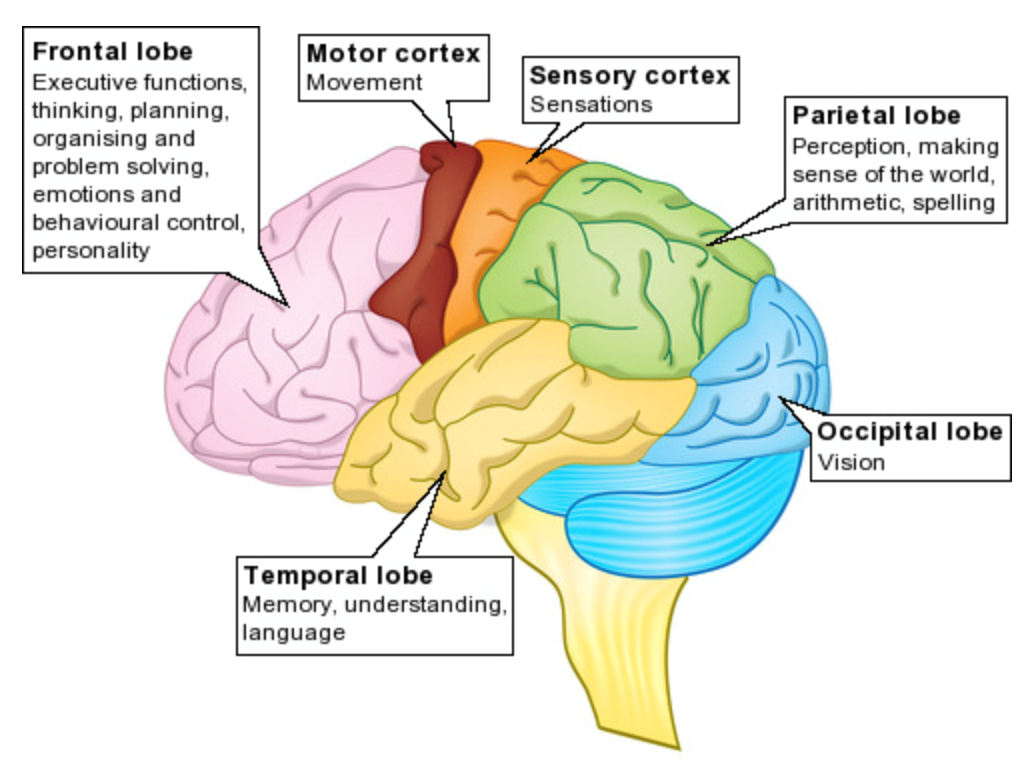
First, Dr. Jay Giedd at the National Institute of Mental Health conducted a study in which he examined 145 brains of normal children by scanning them at 2-year intervals with magnetic resonance imaging. While studying the prefrontal cortex, he found that “the brain appeared to be growing again just before puberty.” This evidence was shocking to the researchers. The prefrontal cortex is responsible for reasoning, impulses, and judgement, thus teenager’s impulsive decisions and poor judgement could be attributed to this growth.
Second, Giedd hypothesized that “the growth in the gray matter followed by the pruning of connections is a particularly important stage of brain development,” because the choices that teens make affect the rest of their lives. For example, if a teen is participating in clubs or sports, those cells and connections will be hardwired into their brains for life. In the same way, if a teen decides to sit on the couch and play videogames all day, those cells will be hardwired into their brain. Therefore, the choices teenagers make today affect the rest of their lives and futures.
Third, researchers hypothesize that the corpus callosum, which integrates motor, sensory, and cognitive behavior, is largely controlled by your genes. Meanwhile, the cerebellum, while coordinates your voluntary movements, is “not genetically controlled and is thus susceptible to the environment.” It is also widely agreed upon that part of the reason teenagers take more risks is because their frontal cortex is immature. The frontal cortex “is the area of the brain that takes a second look at something and reasons about a particular behavior.”
Overall, the researches states that they will have to do “a lot more work on [the teenage brain] before it’s science.” Thus, the amount of possible research on how the adolescent brain translates thought to behavior remains limited for now.
What So Interesting About Working In A Video Game Company?
 |
| Youtube.com |
The economic principle I’m exploring is “People generally respond to incentives in predictable ways. ”
My research question to help me study the economic principle is “What so great about working in a video game
company”
company”
The article/video/etc published in [name of publication] titled “Pluralsight” demonstrates this economic principle
because it shows the key factors that are used to make a great game.
because it shows the key factors that are used to make a great game.
First, great gameplay edges great stories. This is a contradictory phrase cause if there a good story and bad gameplay
players will have no forward emphasis to play the entire game. Same goes the other way if gameplay is good and
story sucks they will just wanna play it cause its playable and they do not follow the story. From the article on
Pluralsight the author explains how ¨ A game can have an awesome story, but if the gameplay is bad there'd be no
reason to play it. Games at their core are meant to be interactive, a way for a person to immerse themselves in the world.
Unlike a movie where you're just along for the ride, a game gives the player complete control. If the control you give
them is clunky and not fun to play then you won't have a great game.¨
players will have no forward emphasis to play the entire game. Same goes the other way if gameplay is good and
story sucks they will just wanna play it cause its playable and they do not follow the story. From the article on
Pluralsight the author explains how ¨ A game can have an awesome story, but if the gameplay is bad there'd be no
reason to play it. Games at their core are meant to be interactive, a way for a person to immerse themselves in the world.
Unlike a movie where you're just along for the ride, a game gives the player complete control. If the control you give
them is clunky and not fun to play then you won't have a great game.¨
Second, great art style. If you have a great concept and you want the players to feel that concept the art style should fit
the theme of the video game. From the article on Pluralsight the author explains how, ¨However, great graphics don’t
always translate to an extremely realistic experience. For a game to be great graphically doesn’t mean the graphics have
to be a certain style.¨
the theme of the video game. From the article on Pluralsight the author explains how, ¨However, great graphics don’t
always translate to an extremely realistic experience. For a game to be great graphically doesn’t mean the graphics have
to be a certain style.¨
Third, the players should work for it. If you start off in a game with all the supplies, weapons, items and ect… in the
game it will be fun until you used all your excitement in one single day. From the article on Pluralsight the author
explains how ¨A game needs to be challenging for the player. Of course, not impossible to finish but it should be
difficult enough to keep the player engaged. You don’t want a game that can be completed with no effort in a short
amount of time. Gamers like to be challenged, when they complete a level or mission they want to feel like they had to
work for it and like they accomplished something.¨
game it will be fun until you used all your excitement in one single day. From the article on Pluralsight the author
explains how ¨A game needs to be challenging for the player. Of course, not impossible to finish but it should be
difficult enough to keep the player engaged. You don’t want a game that can be completed with no effort in a short
amount of time. Gamers like to be challenged, when they complete a level or mission they want to feel like they had to
work for it and like they accomplished something.¨
The effectiveness of the central route on persuasion in advertising

The economic principle I’m exploring is “people generally respond to incentives in predictable ways”
First, that the interactivity of the peripheral route causes the consumer to be distracted from product-relevant information.
Second, Higher interactivity may distract less experienced internet users from relevant parts of a ad.
Third, The central route leads to be more effective and leads more positive attitudes than an interactive website.
In my next blog post I will research: How is each persuasion applied in an ad?
The effectiveness of the peripheral route to persuasion in advertising.

SOURCE: Publication, Title, Author (if available), URL
Proquest, THE EFFECTIVENESS OF BANNER ADVERTISEMENTS: INVOLVEMENT AND CLICK-THROUGH, Chang-Hoan Cho.
The economic principle I’m exploring is “people generally respond to incentives in predictable ways My research question to help me study the economic principle is “ What incentives do they use are more effective The article published in proquest research library titled “ The effectiveness of banner advertisements: Involvement and click-through” demonstrates this economic principle because it argues/shows people generally respond better to the peripheral route to persuasions.
First, because it has more involvement for the consumer, more involvement equals more likely the consumer will be engaged in the ad.
Second, People are more likely to click on the ad if it uses the peripheral route because it is attention getting. People could also click on the banner it if it has a positive peripheral cues.
Third, In short, those with low product involvement may click the banner ad simply because the banner has positive peripheral cues (e.g., larger size). Similarly, dynamic animation in banner ads will also work as a good peripheral cue for causing those with low product involvement to click the banner ad.
In my next blog post I will research: How effective the central route to persuasion is.
Sunday, April 22, 2018
Social Media Ads Change What you Think of Yourself
 |
| cnet.com |
The economic principle I’m exploring is “People generally respond to incentives in predictable ways/Institutions are the “rule of the game” that influence choices” My research question to help me study the economic principle is “How do companies incentivise men and women differently thru advertising?”
The article published in “Targeted Ads Don’t Just Make You More Likely to Buy — They Can Change How You Think About Yourself” demonstrates this economic principle because it shows a different and more efficient and effective way to advertise to people by using personalized targeted ads. I think this also connects back to advertisements that are connected to behavior and how it can also configure how someone thinks of themselves.
First, there was a study of 188 undergraduate students who were said to have wanted to buy a groupon for a restaurant in an advertisement because they were told it was given to them based on their online presence and what websites they had visited. They also were asked how sophisticated they felt and they all responded saying they perceived themselves as very sophisticated. In actuality though, it wasn’t true and it was a random ad given to them. “This suggested that behavioral targeting specifically—not targeting group level attributes—increased their interest in the product.”
Second, another study was made for students showing them a high-end watch and how they also felt more sophisticated based on the fact that they thought it was specified to them when in reality it truly wasn’t. Also the next test test they did was giving people an environmentally friendly product and were told the same thing that the others were told and how this ad was specifically targeted to them. They then told how they were really outdoorsy, when their true online activity didn’t show that.
Third, the last test was on adults and they didn’t react the same to the testing. They were tested with outdoorsy hot cocoa, and those that were truly outdoorsy felt more outdoorsy while those that weren’t didn’t take any notice to the ad and didn’t change their perception to themselves.
This shows that if something that pops up targeted at one gender on someone’s feed online, it could change their perception of themselves completely or could affect their self esteem. “This targeting may change how consumers see themselves and make them feel like they already have traits implied by the ads.”
In my next blog post I will research: How companies are avoiding stereotypes in order not to offend consumers.
Friday, April 20, 2018
Consumerism in Conclusion
 |
| Source: Odyssey.com |
The economic principle I researched was “people respond to incentives in predictable ways,” and “institutions are the 'rules of the game' that influence choices.¨ My overall research question was: How has a spike in consumerism in our culture altered the way stores produce, advertise, and sell? Likewise, how has consumerist culture changed the incentives behind buyer's purchases? Consumerism is both the result of business advertising and a consequence of changing American culture. Therefore, companies have used subliminal messaging, targeting advertising based on demographics, and social media to incentivize us to buy more. However, we can escape consumerism through giving more, looking to yourself rather than people online, and simply forcing yourself to buy only what you need.
Firstly, a spike in consumerism has lead to stores producing, advertising, and selling differently. In the past, according to “How Powerful is Advertising?” with cultural changes, come advertising changes. For example, in the 70s-90s, the civil rights movements in America lead to marketing targeting specific groups of people, whether it be specifically females, males, racial groups, and so on, in order to appeal to them and sell more. Recently, a lot of marketing is geared towards social media and appealing to the individual person, with information companies can get on your searches, etc. Not to mention, according to “How Advertising Has Changed Over Time” with the rise in consumerism, marketing has also altered the way stores advertise, produce, and more, in the way that they do MORE, as in, there is so much competition in terms of marketing that each store has to advertise everywhere they can in order to keep up. Not to mention, the content of these ads focus a lot these days on having the “perfect life.” With the rise in technology and social media, trying to find happiness has been the basis on a lot of ads and products, because that is the incentive behind a lot of purchases, and the reason consumerism became so prominent in America to begin with.
To branch off of this, consumerism has changed the incentives behind purchases significantly. Claims “The Crisis of American Consumerism”, it all started with the rise in the “American Dream” in the 50s. After World War 2, the average person´s income nearly tripled, and they were able to buy more, and move to suburbs, etc, which lead to the American Dream, and a spike in consumerism. Since then, Capitalism swept America. Before this, material goods were not nearly as precious to the average person. Now, incentives are usually based on keeping up appearances and trying to find happiness. Having more new, expensive things in order to keep up with trends and society is the reason most people buy anything these days. Although, says “9 Intentional Ways to Challenge Consumerism in Your Life,” you can break from this sometimes overwhelming mindset by attempting to live your own life rather than trying to copy others you see in the media/around you. Also, you can escape this consumerist mindset by giving more rather than buying, which you will find makes you feel much better than purchasing.
In all, consumerism has lead to advertising and incentives changing and molding each other. When culture changes, advertising changes, and sometimes advertising changing molds culture, as we can see from these points. In the end, consumerism is a mindset most people have in the 21st century, but it can be changed if you truly break yourself from the mold and live your own life, not someone else´s.
Supreme's Laws of Supply and Demand
 |
| Source:https://edublognss.wordpress.com/2013/04/17/supply-and-demand/ |
My research question to help me study the economic principle is “How has the choice for Supreme to have limited supply of items and only a few store locations contributed to the public demand for the products? How and why? Why has Supreme deliberately limited the supply of its goods despite consumers willing to pay such a price?”
The article published in Investopedia titled “Law Of Supply and Demand.” demonstrates this economic principle because it shows the relationship between supply and demand, and the factors the contribute to why supply and demand change.
First, I looked into what supply and demand were. I had previously learned that supply and demand are on a scale and you need to find a balance or equilibrium between the two. The article elaborated on that by saying “Generally, low supply and high demand increase price.” So that answers my question, there is a low supply of Supreme products so the demand is high. But Supreme hasn’t changed it’s prices rapidly because of their success, and they haven’t capitalized on the popularity of their products and made more of them.
I wanted to look into this more. If I was in charge of Supreme I would be opening more stores and selling way more product, to capitalize on the success of the brand, but Supreme has chosen to stay a “small” brand. For this I had to look into what would happen if they made more product and increased their supply. I found in the article that “the greater the supply and the lower the demand, the price tends to fall.” This made me wonder if and increase in supply would drastically change Supremes customer base. Supremes current marketing plan is that they have limited items, and it’s “hype” to own them.
Third, If Supreme were to increase their supply how would it affect the demand. I found that “Demand is affected by the quality and cost of a product, among other factors. The number of available substitutes, amount of advertising and the shifts in the price of complementary products also affect demand.” I came to the conclusion that Supreme has to keep a lower supply of products in order to remain relevant. If they were to increase their supply they would be like every other brand. People are attracted to the “hype” of items, and it draws in its own niche market. In my next blog post
I will research: What effects do “pop ups” have on the resell market? Does it increase or lower demand for product?
The Animation Pipeline: Modelling, Rigging, and More
 |
| i2.wp.com/allpcworld.com |
The economic principle I’m exploring is “Because of scarcity, people choose. All choices have an opportunity
cost.”
cost.”
My research question to help me study the economic principle is “what is the production process of animation like
and how is it done most economically?”
and how is it done most economically?”
The article published in Blender Unleashed titled “Making Sense of the 3D Production Pipeline” demonstrates this
economic principle because it shows that specific parts of producing an animated film are broken down into
entire specialized careers of their own; a studio hires animators (and invest in specific software) that can
accomplish very specific tasks very well, such as 3D modeling or voice acting, so they can get the most out
of the production process.
economic principle because it shows that specific parts of producing an animated film are broken down into
entire specialized careers of their own; a studio hires animators (and invest in specific software) that can
accomplish very specific tasks very well, such as 3D modeling or voice acting, so they can get the most out
of the production process.
First, animation studios always prefer to hire artists that have an understanding of all parts of the pipeline.
Communication and teamwork is a big part of working on film projects, so even someone specialized must be able to
work ideas out with someone from a different specialty.
Communication and teamwork is a big part of working on film projects, so even someone specialized must be able to
work ideas out with someone from a different specialty.
The parts of the pipeline include voice recording on top of the rough storyboards; concept design, which means
creating illustrations of characters, scenes, and props to help the animators animate these in the software; modeling
and texturing, which is how animators “sculpt” characters and scenes in the software they use; rigging and creating
extreme expressions, which is how animators figure out all the different kinds of movements and facial expressions
a character can make; the actual animation of characters moving around; special effects, like making water and
nature movements look lifelike; lighting and rendering, which gives an animated film a life-like atmosphere and a
painterly appearance; editing and final troubleshooting, simply touching up on the film.
creating illustrations of characters, scenes, and props to help the animators animate these in the software; modeling
and texturing, which is how animators “sculpt” characters and scenes in the software they use; rigging and creating
extreme expressions, which is how animators figure out all the different kinds of movements and facial expressions
a character can make; the actual animation of characters moving around; special effects, like making water and
nature movements look lifelike; lighting and rendering, which gives an animated film a life-like atmosphere and a
painterly appearance; editing and final troubleshooting, simply touching up on the film.
Second, while animation used to be 2D - meaning feature-length films used to be entirely hand drawn - the fairly
recent transition into 3D has allowed the production process to be significantly shorter and more efficient. As of
2011, animation studios invest in computer programs like Autodesk Maya and Maya Software and Hardware
(animation), 3D Studio Max (rendering), Mental Images Mental Ray (special effects), and Final Cut Pro (final editing)
- each dedicated to specific parts of the pipeline of 3D animation.
recent transition into 3D has allowed the production process to be significantly shorter and more efficient. As of
2011, animation studios invest in computer programs like Autodesk Maya and Maya Software and Hardware
(animation), 3D Studio Max (rendering), Mental Images Mental Ray (special effects), and Final Cut Pro (final editing)
- each dedicated to specific parts of the pipeline of 3D animation.
Third, many highly experienced animators choose to specialize in certain steps of the pipeline so that they can
contribute their best work to an animation studio, and a studio can get the most out of this artist. Some specialized
animators call themselves texture artists or 3D modelers. For animators starting out, it’s best to be good at everything
to increase chances of being hired. Specialization can be important for big studios like DreamWorks and Pixar - but
for smaller studios where just a handful of (or fewer) animators are working on a project, multiple or most parts of
the timeline will be distributed amongst these artists.
contribute their best work to an animation studio, and a studio can get the most out of this artist. Some specialized
animators call themselves texture artists or 3D modelers. For animators starting out, it’s best to be good at everything
to increase chances of being hired. Specialization can be important for big studios like DreamWorks and Pixar - but
for smaller studios where just a handful of (or fewer) animators are working on a project, multiple or most parts of
the timeline will be distributed amongst these artists.
In my next blog post I will research: How has the animation industry changed since its start in the early 20th century?
How is it a growing field?
How is it a growing field?
What is banned in Illinois?
 |
| Source of image |
What is not allowed in Illinois?
The economic principle I’m exploring is “People generally respond to incentives in predictable ways”
My research question to help me study the economic principle is “When do people find it necessary to purchase firearms?” This article allows me to know what is allowed in Illinois and what is banned from Illinois. It also helps explain why something may have been banned in Illinois.
First, The article demonstrates this economic principle because it shows that you may not own a short barreled shotgun. If the barrel length is lower than 18’ Inches the shotgun is not allowed legally in Illinois. They have this law so people can not easily conceal these types of firearms because they have been proven to be extremely deadly.
Second, The article demonstrates this economic principle because it shows that suppressors are illegal in Illinois. A suppressor, commonly known as a silencer, is something that reduces the amount of noise from a firearm. Most liberal states do not allow these because they are concerned that the guns noise will be reduced so much that it will not be recognizable and therefore useful for crimes such as homicide. In conservative states they allow suppressors because they understand that the suppressor only reduces sound about 15 decibels, which isn't a lot at all. They allow these because it makes firing a firearm a bit healthier for the ears, especially in indoor gun ranges.
Third, The article demonstrates this economic principle because it shows That fully automatic firearms are not allowed unless you have a special license. They do not allow full auto firearms in any state because they only use for a fully automatic firearm is to kill. Otherwise there is no benefit or use for having a full auto gun.
What are gender norms?
 |
| empowher.com |
First, Gender roles appear in every community. It is a “a set of expectations associated with the perception of masculinity and femininity”. Similarly, a gender norm is defined as a consistent pattern of what individuals do based on the gender they identify themselves as. As an example, women are stereotyped to stay at home to cook, clean, and take care of children. Although that is mostly behind us, it still distorts the positive image of women who have jobs and are successful.
Second, these ideas are important because they limit the opportunities of my men and women, especially in the job industry. Many people agree that the norms “limit individuals in their ambitions and life”. They also “influence the formation of skills and interests and affect deep dimensions of (subconscious) mental structures” which can hurt the success of women and men in the long run. These subconscious limits are formed based on how we treat and represent each gender on television, at home, and in the community.
In the next blog post I will be researching How difference in salaries relate to gender norms.
The Patriarchy and Veganism
The economic principle I’m exploring is “Institutions influence the ‘rules of the game’”
 |
| Credit: Whatispsycology.biz |
My research question to help me study the economic principle is “what demographics make up vegetarians and vegans?”
The article titled Veganism is a women’s lifestyle, according to statistics “ https://www.huffingtonpost.com/2014/04/01/vegan-woman-lifestyle_n_5063565.html” demonstrates this economic principle because it argues/shows that women comprise the majority of vegans in America.
According to the essay, 79% of vegans in America are women. Should there be no institutions in place, this number would be approximately 50%, leaving room for those who are gender nonconforming. From this, one can infer that those who choose to be vegan, and thus make a huge lifestyle choice, are influenced by some unknown force. The article makes some inferences as to what these can be, but the majority of them are just guesses that rely strongly on gender stereotypes.
Second, the article notes that women make up 59% of vegetarians. This statistic is shocking, given that the margin is much more stark for vegans than vegetarians. This is much closer to what statistically one would expect it to be, which raises possibly more questions than it answers. If those gender stereotypes that women supposedly comply with make them vegan, why do they not influence a higher majority of women to be vegetarian?
Although I am just beginning my research, I am perplexed. Before reading the data on vegetarians, I was sure the reason more women were becoming vegans was because they felt they needed to comply with stereotypes of their gender, which included them being more health conscious and compassionate. However, I no longer believe the issue to be that of oppression, but rather one of empathy. The difference between veganism and vegetarianism primarily lies with female animals. In the meat industry, both male and female animals are eventually slaughtered to become food. However, in the dairy and egg industries, it is the female animals who bear the primary burden of suffering. Female cows are the ones who are subjected to a horrible life on farms where they are milked and it is female chickens who must live out their lives as nothing more than egg laying machines. While everyone is able to empathise with the fear of dying and suffering, and thus animals in the meat industry, I believe women are more able to empathize with the female animals harmed in the dairy and egg industries. They know what it is like to be reduced in value to their reproductive organs, and this is not a new fear for them. It is from their empathy and fear of being exploited like these animals that more women are turning to veganism than men. The institution at play in this debate is western society’s patriarchal history and our continuing legacy of gender inequality. Until that is addressed, women will continue to lead the vegan movement, hoping they can reduce female suffering wherever they can. In my next blog post I will research the role one’s cultural identity plays a role into their decision to live a vegetarian or vegan lifestyle.
Thursday, April 19, 2018
Men and Women are Stimulated by Different Advertising
 |
| http://thevisualcommunicationguy.com/ |
 |
| http://thevisualcommunicationguy.com |
The economic principle I’m exploring is “People generally respond to incentives in predictable ways/Institutions are
the “rule of the game” that influence choices”
My research question to help me study the economic principle is “How do companies incentivise men and women
differently thru advertising?”
differently thru advertising?”
The article published in “How to Appeal to Men vs. Women in Advertising” demonstrates this economic
principle because it shows how men and women are stimulated by different advertising and what advertisers
should use these strategies in order to appeal to certain people.
principle because it shows how men and women are stimulated by different advertising and what advertisers
should use these strategies in order to appeal to certain people.
First, this article discusses how men are mainly stimulated by images and not words while for women, it goes
much more in depth. For women, they most commonly do deeper research into an advertisement and questions
what it says. They also typically question whether it is worth buying, or if they can get a better deal somewhere else.
While this happens for women, men, if they see what they like, they will buy it and not question what the
advertisement says.
much more in depth. For women, they most commonly do deeper research into an advertisement and questions
what it says. They also typically question whether it is worth buying, or if they can get a better deal somewhere else.
While this happens for women, men, if they see what they like, they will buy it and not question what the
advertisement says.
Second, men and women enjoy to see their catered taste with in an ad, for example, men would rather see more
masculine details in an ad when buying a product. They would like to see sports cars and masculine strong jawed
men in order to make themselves believe if they buy that product they will become that masculine and relate to
the product. For women, they enjoy to see the strength of women and also more feminine colors and aspects to
a product.
masculine details in an ad when buying a product. They would like to see sports cars and masculine strong jawed
men in order to make themselves believe if they buy that product they will become that masculine and relate to
the product. For women, they enjoy to see the strength of women and also more feminine colors and aspects to
a product.
Third, people generally enjoy to see more beautiful people. They discuss the example
of how even babies enjoy to see more beautiful faces than uglier ones. This is a harsh factor, but it is true.
of how even babies enjoy to see more beautiful faces than uglier ones. This is a harsh factor, but it is true.
In my next blog post I will research: How specifically targeted ads don’t just affect what you buy, but
how it affects how you think of yourself and a new option instead of gender targeted ads.
how it affects how you think of yourself and a new option instead of gender targeted ads.
Subscribe to:
Posts (Atom)