 |
| Source: Educating Matters |
My research question to help me study the economic principle is To what extent can we research how adolescent brains translate thought to behavior?
The article published in Frontline titled “Work in Progress” demonstrates this economic principle because it shows the research that has been done in order to understand adolescent brains.
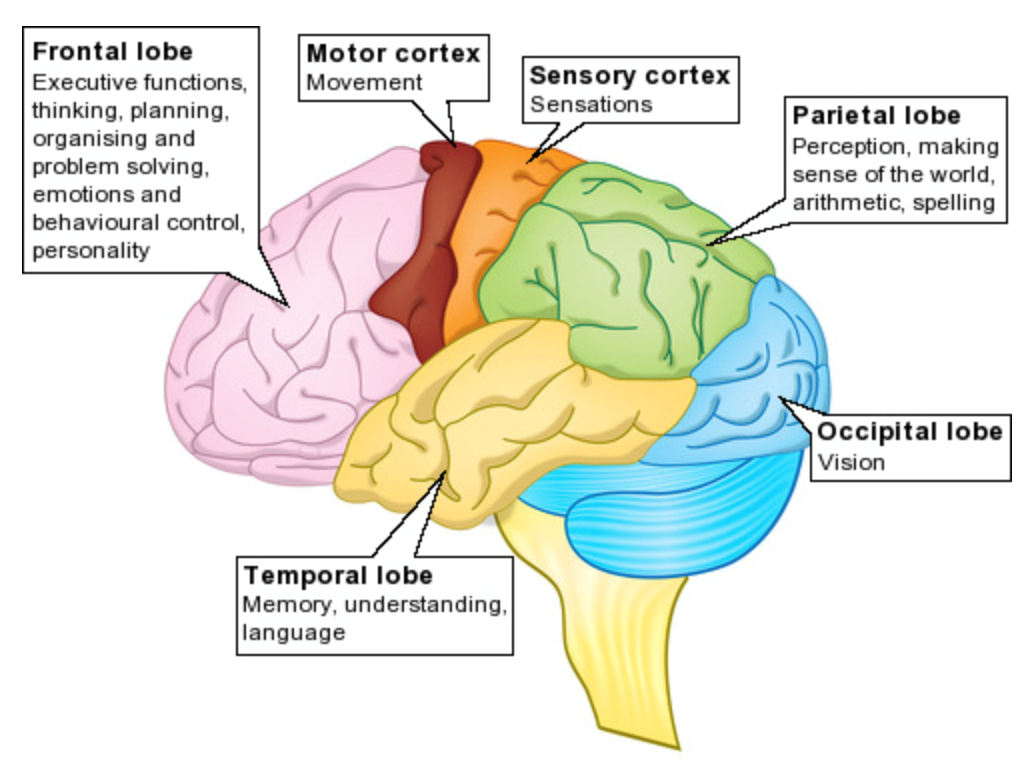
First, Dr. Jay Giedd at the National Institute of Mental Health conducted a study in which he examined 145 brains of normal children by scanning them at 2-year intervals with magnetic resonance imaging. While studying the prefrontal cortex, he found that “the brain appeared to be growing again just before puberty.” This evidence was shocking to the researchers. The prefrontal cortex is responsible for reasoning, impulses, and judgement, thus teenager’s impulsive decisions and poor judgement could be attributed to this growth.
Second, Giedd hypothesized that “the growth in the gray matter followed by the pruning of connections is a particularly important stage of brain development,” because the choices that teens make affect the rest of their lives. For example, if a teen is participating in clubs or sports, those cells and connections will be hardwired into their brains for life. In the same way, if a teen decides to sit on the couch and play videogames all day, those cells will be hardwired into their brain. Therefore, the choices teenagers make today affect the rest of their lives and futures.
Third, researchers hypothesize that the corpus callosum, which integrates motor, sensory, and cognitive behavior, is largely controlled by your genes. Meanwhile, the cerebellum, while coordinates your voluntary movements, is “not genetically controlled and is thus susceptible to the environment.” It is also widely agreed upon that part of the reason teenagers take more risks is because their frontal cortex is immature. The frontal cortex “is the area of the brain that takes a second look at something and reasons about a particular behavior.”
Overall, the researches states that they will have to do “a lot more work on [the teenage brain] before it’s science.” Thus, the amount of possible research on how the adolescent brain translates thought to behavior remains limited for now.

No comments:
Post a Comment